


Pumps are one of the most important pieces of equipment around your farm or ranch. From supplying fresh, potable water to the kitchen sink to moving water from potholes, pumps have many applications. With so many different choices, relying on expert advice to properly size a pump is critical.
“We get pump training from manufacturer representatives so that we can recommend the right pump for the job,” says Harvey Thibault with Pineland Co-op in Nipawin, Sask., who has helped farm customers select pumps for over 20 years.
Domestic water supply
Pump selection is critical for everyday life in rural and remote areas.
“Our customers rely on pumps every day for household or livestock watering and they need to be confident that their pumps are sized properly,” said Thibault.
He explained pump selection is based on the type of well, depth, how far and high the water has to be pushed, and the electrical power available. For example, a one-horsepower submersible pump running on 230 volts can push water up to 300 feet and pump up to eight U.S. gallons per minute. Conversely, a one-horsepower shallow well jet pump can lift water up to 25 feet and discharge seven U.S. gallons per minute at 40 pounds per square inch.
Matching pressure tank size to pump capacity is as important as selecting the pump itself to maximize its life. Thibault also recommended using an automatic pump control to prevent a submersible pump from burning out if the water level drops below the pump intake.
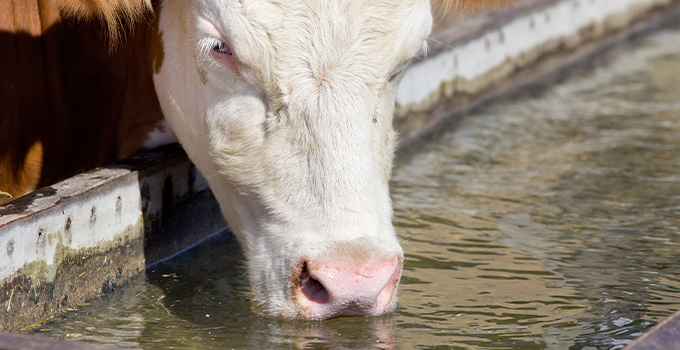
Remote livestock watering
Thibault said several options exist for areas without electrical service. Solar powered pumps can be installed in dugouts, rivers, creeks and wells. They are available as floating, submersible and surface-mounted pumps. Solar panels are matched with a battery bank to ensure constant power supply to the pump. These pumps supply water to a livestock trough and water levels are regulated with a float switch.
Another option that doesn’t rely on power lets livestock do the pumping with a nose pump. Livestock push on a paddle with their noses, which drives a mechanical piston pump to bring water into a bowl for drinking.
Going big with transfer pumps
A trend in transfer pumps is going big. With sprayer tanks and nurse tanks becoming much larger, farmers want to minimize filling time in order to keep the sprayer running.
“Everyone wants bigger and faster. We used to sell six-horsepower pumps that gave 200 gallons per minute, and now we’re selling lots of 13-horsepower pumps with a capacity of 436 gallons per minute,” said Thibault. “Some farmers use semi-tanker trucks for nurse tanks now, so they need a pump that can fill them up fast.”
Transfer pumps can also be used for many other farm applications such as irrigation, draining potholes, pumping slurry or building that hockey rink for winter fun. Talk to your local Co-op Equip Team member for advice and product recommendations on these and many other farm pump applications.