


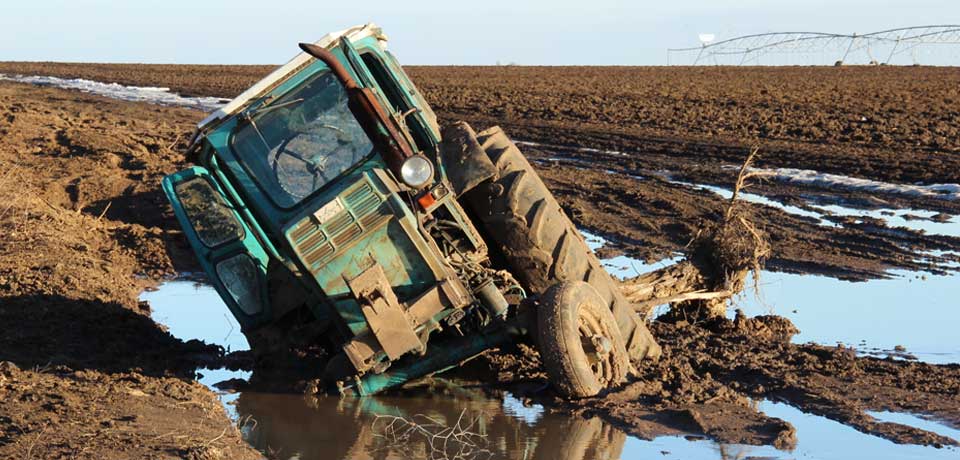
Everyone gets stuck. It can be both funny and frustrating, a seemingly simple task that hinders your day, but you don’t think too much about.
However, extracting a stuck vehicle or piece of farm equipment can result in damage to equipment or a potentially serious accident. To safely get the job done and get back to work, assess the situation and select the proper equipment before hooking and pulling.
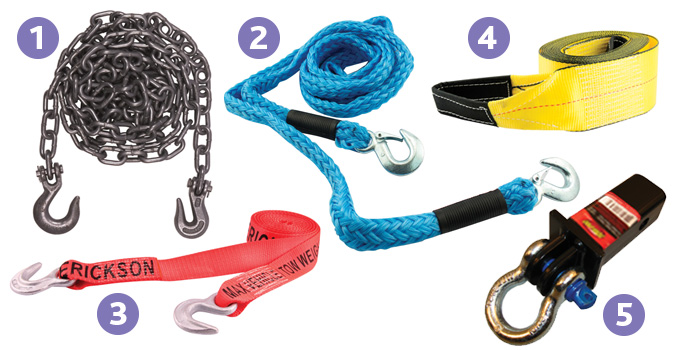
1- chains, 2 and 3- tow ropes and straps, 4- recover straps, 5- clevises
Chains
Every farm has a few chains hanging around the shop. Chains may work fine as long as they are strong enough. For example, a Grade 70 5/16-inch chain is rated for 4,700 pounds safe workload and can be used for lifting or securing loads but not for towing or vehicle extraction. A Grade 80, ½-inch chain with a rating of 11,300 pounds might be OK for pulling smaller farm vehicles. A Grade 100 ¾-inch chain would handle 35,300 pounds of working load.
If you’re using a chain for vehicle extraction, ensure the hooks are also rated for the job. Chains can work fine for pulling out vehicles or equipment, but never jerk a chain when starting to tow as this increases the likelihood of failure. Also, never use a chain with bent or stretched links or links that are bolted together.
Tow ropes and straps
Tow ropes and tow straps do not stretch and are designed for pulling vehicles down the road. Their hooks are rated for weight, and cannot take the stress for extracting stuck vehicles. A tow rope or tow strap rated at 8,500 pounds is suitable for pulling a disabled three-quarter ton truck home, but would fail with heavier equipment or pulling out stuck vehicles or equipment.
Recovery straps
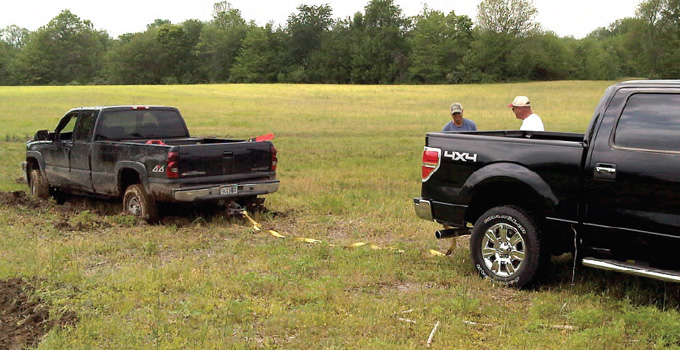
A recovery strap is the go-to piece of equipment for pulling out stuck vehicles and equipment on the farm. They are made of nylon and are designed to stretch under tension. Stretching builds up tension, which helps to pull out the vehicle much like a bungee cord.
Recovery straps are also rated for strength, commonly up to 110,000 pounds or more. The strength of the recovery strap depends on the width and number of plies (layers) in the strap.
Clevises
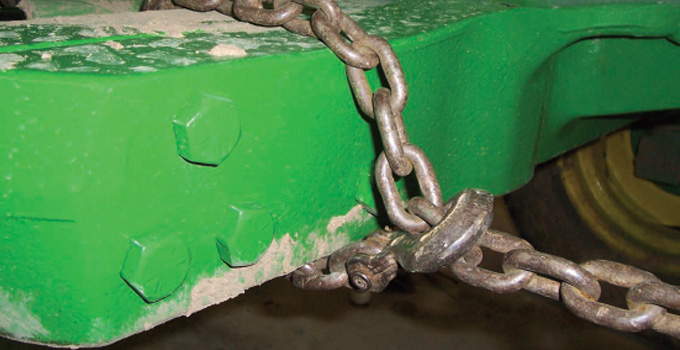
The strength of the attachment point for pulling is just as important as the straps and chains. A screw clevis is designed to be stronger and more reliable than a clevis with a safety pin. Clevises also have strength ratings and should be stronger than the chosen recovery straps. A strap failure poses less risk than a clevis failure.
A final tip is to remember that there is more to pulling or extracting vehicles than hooking and pulling. If you don’t have the correct equipment, or are unsure of safety issues, call a professional towing company.