


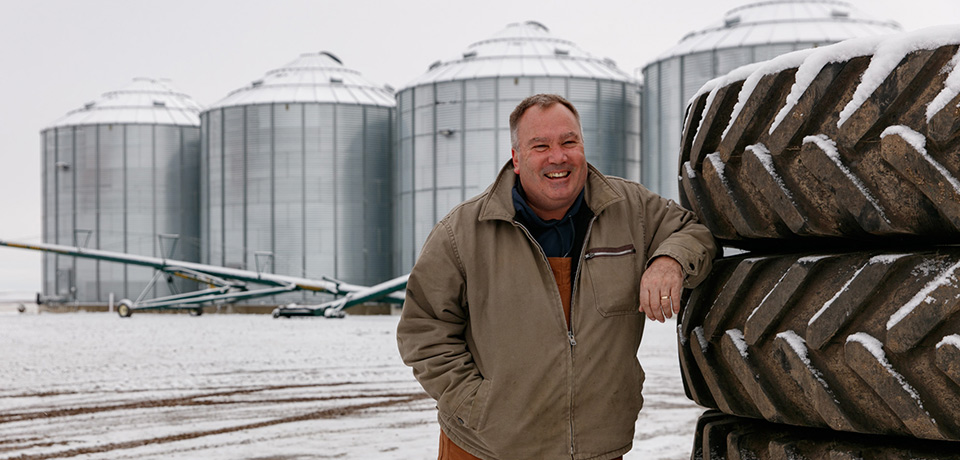
Road trips are an everyday part of life for Ron Yaroslawsky and the Co-op Equip Team in Wetaskiwin, Alta.
In the summer months, the team is kept busy travelling throughout central Alberta, where they work closely with producers to design and build effective grain storage and handling systems.
Each day is as different as the farm they’re visiting and the equipment they’re working with – a preliminary consultation one day, a conveyor delivery the next and a follow-up visit the day after that with a farm that just wrapped up a significant expansion to their bin yard.
“There are all kinds of people running around farm to farm for seed and crop inputs and we really noticed a gap in the service levels on the equipment side. We are changing that,” said Yaroslawsky.
“When we sell big ticket items, we show them how to operate it and make sure that everything is good before we leave.”
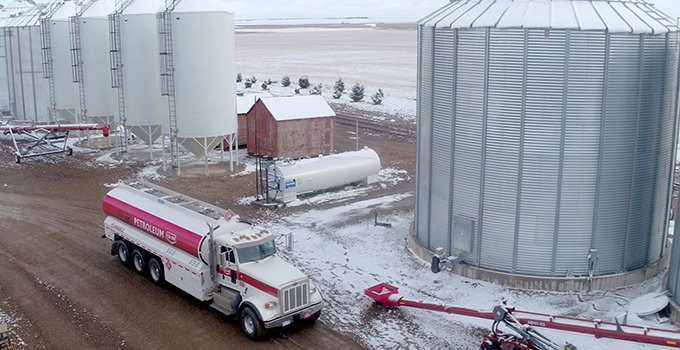
Work smarter, not harder
While growers often have the same goals – to expand storage while improving on-farm efficiency – the solutions that get them there vary, which is why consultations are important.
For every site, Yaroslawsky helps producers assess their existing number of acres and storage capacity, as well as their goals for the future.
How many acres are being farmed today? How many will be farmed in five years? How will that grain be stored, moved, conditioned and monitored?
All of these factors – and more – will determine the equipment and the layout that’s right for the farm. Before a grower commits to a plan, Yaroslawsky will ensure the grower has examined every consideration, including truck-turning radiuses, power availability, lighting, security, safety and room for future expansion.
“We have those open discussions because we don’t want to do all of this work and five years down the road find that you’re bottlenecked and can’t add on or that truckers can’t get in and turn around,” said Yaroslawsky.
Aeration or grain drying?
Yaroslawsky recommends having some sort of aeration bin on the farm at all times to move product in the event of weather or something goes wrong in another bin.
“When you have aeration and drying equipment, you’re harvesting earlier. You can take it off a little wetter and a little greener. If the weather is turning on you, but you know you can dry it down, then you’re going today, rather than guys that don’t have that flexibility.”
Smoothwall or galvanized?
This is another frequent conversation Yaroslawsky has with customers, to which he asks how long will they farm and do they need long-term or temporary storage.
“Per bushel, smoothwall is generally more expensive than a regular galvanized bin, but they retain their value and they’re easy to move,” he said. “As far as storing of product, you get total clean out with a smoothwall and more bells and whistles.”
If customers are going to use financing, he added they might as well lease the top-dollar bin as the difference on your payment between a galvanized and smoothwall can be very small.