


In recent years, seed companies operating in Western Canada have taken a greater interest in soybeans — and so have growers.
The crop, typically grown in Ontario and the U.S. where growing seasons are longer, has seen a significant expansion westward as new varieties deliver earlier maturity dates.
“Soybeans are a small, but greatly increasing, portion of the crop rotation in our area,” said Breanne Kohle, an agronomist with Advantage Co-op in Redvers, Sask., where growers are at the centre of the expansion.
Temperatures, both at the start of the season and at the end, can challenge producers. However, with new varieties available today, growers in Manitoba and southeastern Saskatchewan can successfully introduce soybeans to their farm.
“They are a great fit and farmers appreciate the significant time-management benefits that soybeans offer by spreading out the harvest workload,” said Kohle.
Soybean acres
Almost 1.4 million acres of soybeans were seeded in Manitoba in 2015, while Saskatchewan growers dedicated 270,000 acres to the crop. Those numbers are small compared to other commodities, but show significant growth. Even more growers are expected to adopt the crop in the future as brands like DEKALB® deliver new innovations tailored for western Canadian soils and temperatures.
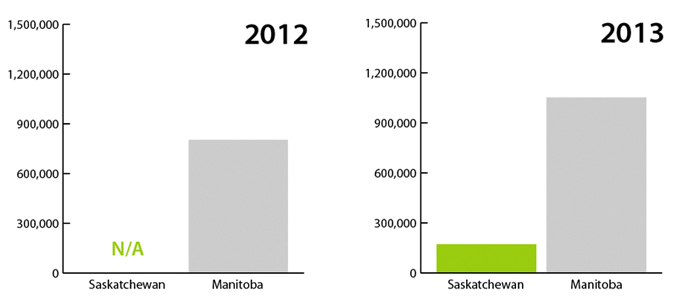
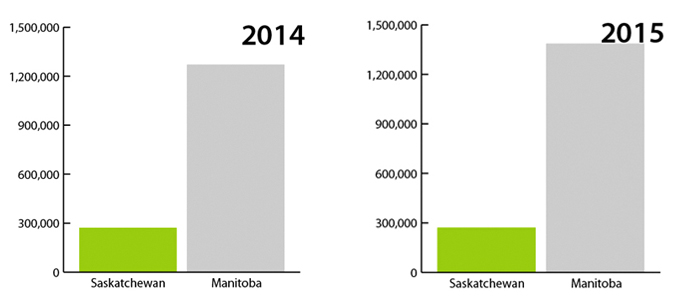
Source: Statistics Canada
In 2016, approximately 1.6 million acres of soybeans are expected in Western Canada and Co-op Agro Centres are equipped to meet growers’ needs with a wide selection of options, including 11 DEKALB varieties.
Kohle said farmers growing soybeans for the first time should carefully consider variety selection, giving consideration to seeding and harvest dates, before making a serious investment.
Two years ago, seeding was delayed in southeastern Saskatchewan, which resulted in some fall frost damage to soybean crops.
Your local AG Team agronomist can help you identify the challenges and opportunities for soybeans in your region.
“This was a great reminder for all growers that the focus should still be on the shorter season varieties that fit their farm,” she said. “Fortunately, with the great genetics in the varieties we have today, lower crop heat unit varieties still offer high yield potential and return on investment.”
DEKALB Growing Knowledge (PDF)
DEKALB agronomists offer production tips, including seeding dates, rates and depths, for successful soybeans.

Advantage Co-op