


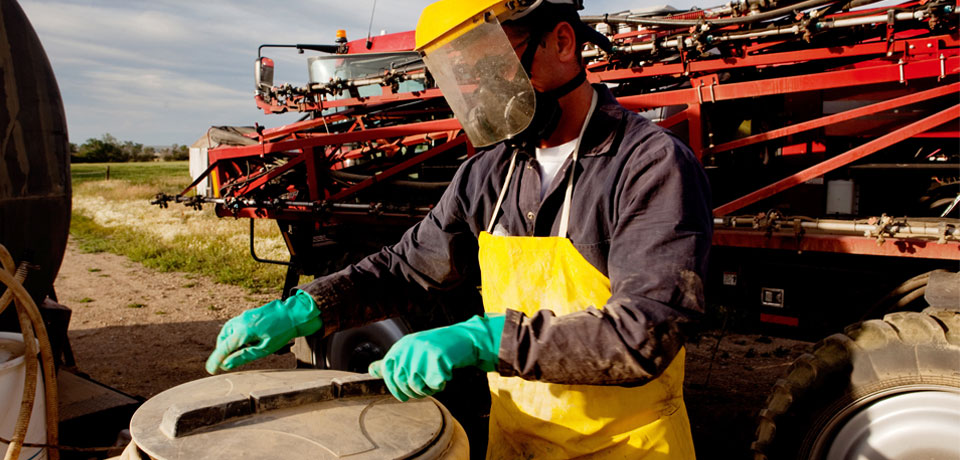
By tank mixing pesticides, farmers can save time and make money. But with the wrong mix, growers risk injury to the crop and lost production time.
To ensure growers make safe and effective herbicide, fungicide and insecticide applications, Brad Ornawka, an agronomist and Certified Crop Advisor with the Prince Albert Co-op AG Team, encourages growers to take their time mixing products.
“Farmers are putting in long days, so they don’t pull out a stopwatch and do an exact time when they’re mixing,” said Ornawka.
“But if you don’t let it agitate long enough, you can either run into issues with the product quality or you could create precipitates in your tank.”
To make an effective tank mix, growers must carefully consult labels. Some products, for instance, take longer to mix. Some dissolve in water and others require oil. Dry products must be added before soluble concentrates.
Thankfully, there are a host of resources available to growers from provincial agriculture ministries, crop input companies and agronomists. Your local Co-op AG Team can help you build a formulation that meets your needs.
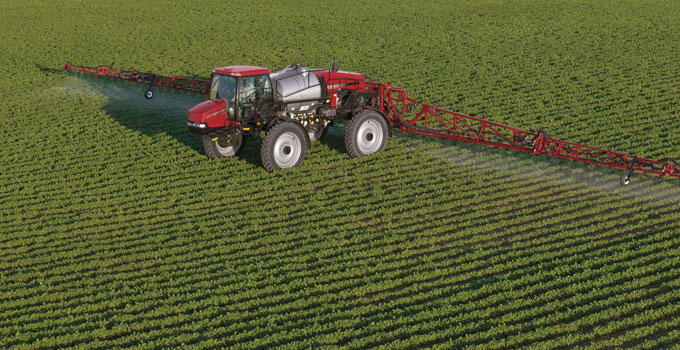
Mixing pesticides
A mix of two or more products allows growers to control a broad range of weeds or other pests in one pass while also combating herbicide resistance. If tank mixing is not done in the correct order, the result could be a tank-load of material that causes problems. The list below is a general guide for mixing pesticides:
- Fill the spray tank with one-quarter to three-quarters of the amount of water required for the application and turn on the sprayer agitation. Check the products that are being used for the correct amount to add. Once agitation has begun, maintain until the tank is emptied.
- Add water conditioner (fertilizer of pH adjuster) additives to the tank.
- Add any wettable powders, or water dispersible granules (DF, DF, or WDG). Add dry products to slowly prevent clogged return lines. Allow sprayer to agitate for a few minutes, allowing the product to become completely suspended in the tank, before adding the next component.
- Shake any containers of liquid pesticide throroughly before adding to ensure they are well mixed.
- Add any oil dispersions (OD) or flowable liquid suspensions (F, SC) to the tank. Allow to mix.
- Add emulsifiable concentrates (EC) or emulsions (ME, SE) to the tank and allow to mix.
- Add any pesticides that are solutions (SN) (i.e. amines and salts).
- Add any sufactants or other adjuvants.
Source: 2016 Guide to Crop Protection - Government of Saskatchewan

New products make mixing easier
The amount of time required to effectively mix products depends on several factors, including the type of sprayer and the kind of products being used. However, Ornawka typically recommends growers spend at least five to 10 minutes making sure the mix is done right.
In the past, growers may have found some dry formulations difficult to work with when granular products that didn’t dissolve collected at the bottom of tanks. In the last decade, new innovations like DuPont’s Barricade™ have improved the performance of these products.
"That would be pose a lot of issues with some farmers. With lots of these newer formulations, they don’t have those problems anymore,” said Ornawka. “That being said, some of these older herbicides are making a comeback now to help fight weed resistance, so growers have to be cognizant of running into these issues by keeping things clean and allowing time for them to mix up and/or dissolve."
In both cases, growers are urged to be diligent. Doing the job right is always preferable to time lost cleaning tanks and nozzles.
More information about the kinds of formulations and surfactants available to growers is available in this bulletin from DuPont Crop Protection.
*Always read and follow label directions and make sure you are wearing the recommended PPE when handling crop protection products.

Agronomist
Prince Albert Co-op