


Many farmers share a common struggle that few ever talk about — mental health. The first step to remove the stigma surrounding mental health issues and ensure everyone gets the help they need is talking about it. That’s why we reached out to individuals in the ag sector and asked them to share their perspectives about mental health, in their own words.
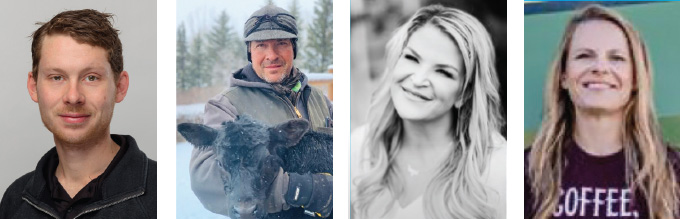
Mark Johnson, Fertilizer Manager, Saskatoon Co-op
2021 was an extremely difficult year for producers throughout Western Canada, with the worst conditions that we have faced in over 20 years. With the extreme drought, current prices of commodities right now are through the roof, supply chains have been disrupted, and life has been completely uprooted by COVID. It’s an extremely stressful time. If preparing for the upcoming 2022 growing season is feeling exceptionally daunting, know that you are not alone.
One of the most rewarding parts of my job is getting to work directly with people — our farmer customers and those who work in the community of agriculture. It’s a community like no other. We need to rely on the support of our agricultural community to look out for each other. When it comes to mental health, no one needs to suffer in silence.
Together, we can continue to build a community of support — because tomorrow needs each and every one of us.
John Smith, Alberta producer
When I was younger, I wasn’t rewarded for having feelings or talking about them. I was rewarded for work ethic and getting the job done, despite everything, and persevering.
Hopelessness is real. Isolation in farming is real. Some days, being busy is a good distraction for me, and some days it’s likely an excuse not to take the time to get the help I might need. You just focus on surviving that day — getting seed into the ground, getting the crops off or calving.
For me, mental toughness is almost a requirement in farming and ranching. We deal with life and death, drought, gambling on markets, financial stress and running a family business of dynamics. Throw into the ongoing shadow of pressure that I put on myself of not being the generation to lose the place.
This past growing season has been the most difficult for me. The severe drought, tough decisions on the cattle herd, a death in the family, COVID — the list goes on. It has been extra heavy, and I am feeling the weight on my mental health. But for me, I’m still too uncomfortable to reach out for mental health support or programs.
Unfortunately, in my generation, the stigma surrounding mental health is still there — or at least I perceive it to be, and maybe that is a block for me that I need to work through. What I do know is that I would like to see it be different for my kids.
I want them to be mentally well. Talking about this with you today is uncomfortable and putting my name to it perhaps even more — and yes, my name is actually John Smith — but maybe that is the first step in change and maybe making the difference.
Dr. Jody Carrington, psychologist, author and agvocate
What I think we have never experienced as an agricultural community in this country is the compounding issues of stress with nowhere to put it. Most of us in the agricultural world are not equipped to deal with an emotional language.
Historically, our farms were smaller, we had face-to-face contact, our houses were smaller, we spent weekends at barbecues and dances and that’s what we did to keep our mental health in check. Now, our houses are bigger, our farms are bigger, everything is programmed to happen faster. Our technology is so advanced that we don’t have to communicate or connect with each other as much. There is a cost to that, and that was in place long before COVID hit. Add to that, since March 2020, we have been in a heightened state of arousal, filled with uncertainty and fear, with no plan and no end in sight.
Quite frankly, connection is what we desperately need. It gives us somewhere to ‘put it.’ So now, we have nowhere to put it and we are even more disconnected. During COVID, we had no church on Sundays, no wings with the guys on Wednesday nights, no curling league, no coaching kids’ hockey teams; the list goes on. Those facilities helped us process emotional stress. As a result, what we are seeing is the highest suicide rate in the population that we in agriculture serve — middle-aged white men. It is a serious and critical compounding issue that has all come together and the question is, ‘What do we do to shift it?’
The fact is, we have every skill we need in our rural roots. Let’s just get back to what we are good at — face-to-face connection, community and putting on that pot of coffee.
Lesley Kelly, Saskatchewan farmer and co-founder of Do More Ag
Farmers are more likely to participate in programs offered by providers familiar with their industry. We started Do More Ag in 2018 with the goal of ‘doing more,’ and championing mental health for Canadian farmers — through support that provides understanding and encouragement for them to take care of their mental well-being.
Our industry has done a good job of talking about the business aspects of our industry, but what we are not good at is talking about the human aspect and the people who work in it. There are significant barriers and challenges in the culture of our industry. It’s deeply rooted in strength and resiliency, and we need that to get us through some of those hard times, but this strength is also our greatest weakness when it comes to mental health. We are working hard to shine a light on a new kind of strength — sharing, talking and listening.
I am so happy to see the progress we are making in the mental health of our industry — with more farmers talking openly on social media and sharing what they are going through. What is so inspiring too is the support they receive afterwards. There are still significant barriers and challenges with stigma and that won’t change in a year or two because that stigma is deeply rooted in generations and decades.
To learn more, or find support, click here.